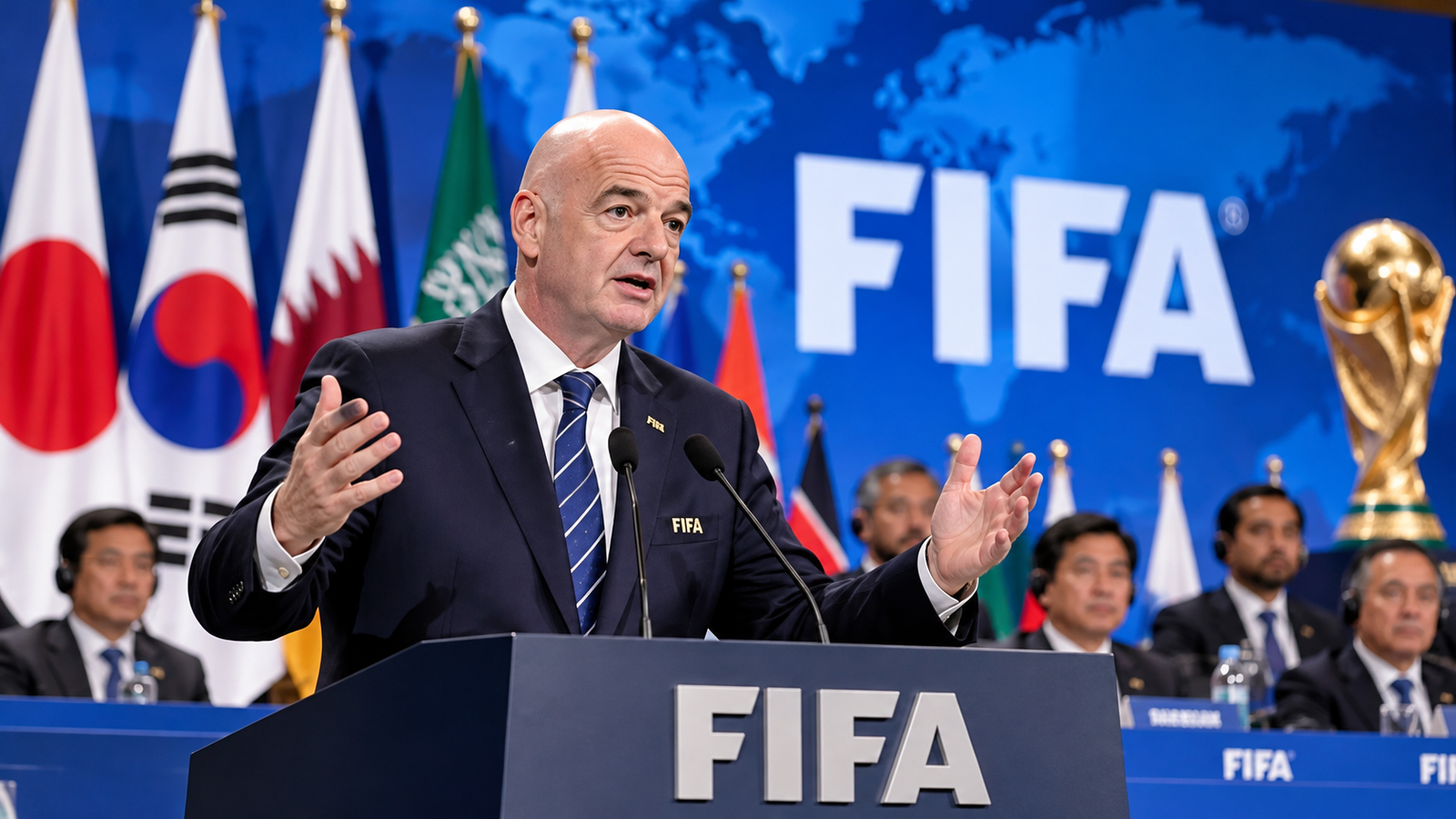
FIFA President support in Asia has become more visible after Gianni Infantino’s recent engagement with football organisations, players and officials across East and Southeast Asia. His activity comes as FIFA expands competitions, development programmes and grassroots initiatives throughout the region.
On 4 October 2026, Infantino attended the inaugural FIFA ASEAN Challenge Cup final in Hong Kong, China, where the hosts defeated Cambodia 2–0 in front of 31,374 fans. He also visited the Hong Kong U-15 team and took part in a FIFA Boots for All activity.inside.fifa
The same day, Infantino visited Macau, China, for the inauguration of new headquarters for the Football Association of Macau, China. The building received support from the FIFA Forward programme, which funds football infrastructure and development projects among FIFA member associations.inside.fifa
These appearances underline FIFA’s focus on practical support, including facilities, youth football, international matches, coaching development and access to equipment. They also show how FIFA is working with the Asian Football Confederation (AFC), the ASEAN Football Federation (AFF) and national associations.
Key Highlights
- Gianni Infantino attended the FIFA ASEAN Challenge Cup final in Hong Kong, China, on 4 October 2026.
- Hong Kong, China, beat Cambodia 2–0 before 31,374 spectators.
- FIFA Forward supported the new Football Association of Macau, China headquarters.
- Macau’s U-15 team is preparing for the inaugural FIFA U-15 World Cup & Festival in Azerbaijan.
- FIFA has continued linking Asian football growth with youth development, infrastructure and meaningful competition.
Table of Contents
- What Happened?
- Important Details
- Why Is This News Important?
- Latest Updates
- Official Statement / Source
- Background / Context
- Reactions and Public Response
- What Happens Next?
- Frequently Asked Questions
- Conclusion
What Happened?
FIFA President support in Asia took a practical form during Infantino’s visit to Hong Kong, China, and Macau, China, in early October 2026. Rather than being limited to formal meetings, the visit connected FIFA leadership with a regional tournament, youth players, national association officials and football development projects.
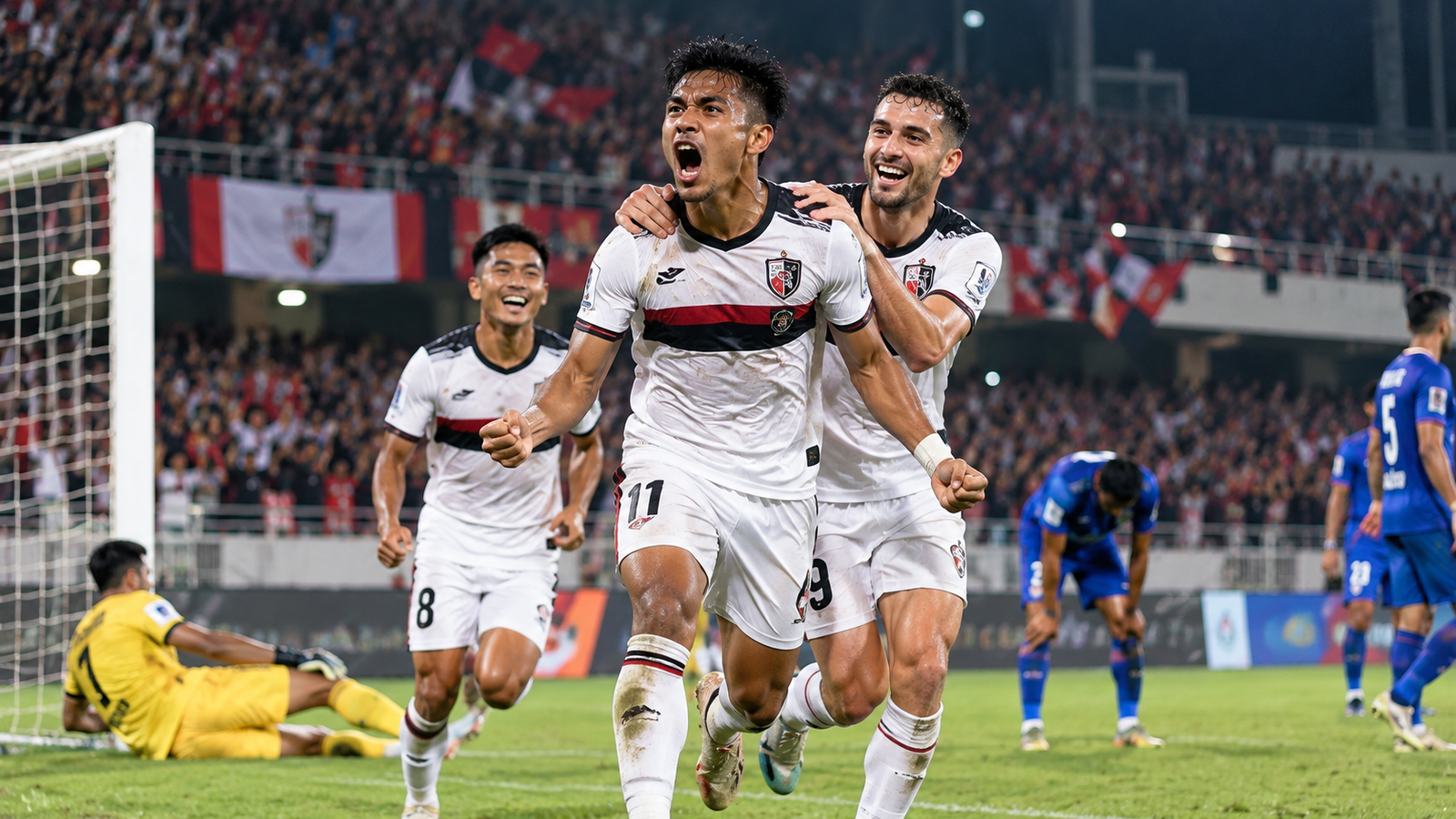
Infantino attended the final of the first FIFA ASEAN Challenge Cup at Kai Tak Stadium in Kowloon. Hong Kong, China, defeated Cambodia 2–0 to win the trophy, with 31,374 fans attending the match. FIFA described the final as an important occasion for the host association and for the broader effort to create meaningful international matches in Southeast Asia.inside.fifa
The event involved more than the final itself. The tournament included Laos, Brunei Darussalam, Myanmar and Timor-Leste, alongside Hong Kong, China and Cambodia. FIFA said the FIFA ASEAN Cup and FIFA ASEAN Challenge Cup together created new opportunities for 14 participating teams to play competitive international football.
Infantino also met the Hong Kong, China U-15 team, which is due to represent the association at the inaugural FIFA U-15 World Cup & Festival in Azerbaijan from 24 to 30 October 2026. During a FIFA Boots for All ceremony, football boots were distributed to young local players.
The FIFA President then visited Macau, China, where he attended the inauguration of a new Football Association of Macau, China headquarters. FIFA said the project was supported by the FIFA Forward programme and marked the first time the association had its own headquarters, 48 years after joining FIFA.inside.fifa
The two visits provide a clear picture of FIFA President support in Asia: tournament hosting, facilities, youth participation and association development are being presented as connected parts of football growth.
Important Details
Who is involved?
Gianni Infantino is the President of FIFA, football’s world governing body. The organisations involved in the recent Asian activity include FIFA, the Football Association of Hong Kong, China, the Football Association of Macau, China, the ASEAN Football Federation and the AFC.
The Hong Kong event also involved local football officials, including Football Association of Hong Kong, China President Pui Kwan Kay and Chairman Eric Fok. The Macau headquarters ceremony involved Football Association of Macau, China President Vitor Cheung, Vice President Coc Veng Chong and General Secretary Chan Keng Hou.
What was the tournament?
The FIFA ASEAN Challenge Cup was an inaugural competition hosted in Hong Kong, China. All of its matches were played at Kai Tak Stadium in Kowloon.
Hong Kong, China, won the final 2–0 against Cambodia. FIFA’s account identified the competition as part of a wider effort to provide more international fixtures for teams in Southeast Asia and neighbouring football communities.
The match also gave the host association a chance to stage a FIFA-branded event before a large home crowd. However, the available official information does not identify the goal scorers, match timeline or detailed player statistics, so those details are not included here.
What happened in Macau?
The Macau ceremony focused on football infrastructure. FIFA said the association’s new headquarters was built with support from FIFA Forward, a programme designed to assist member associations with development projects.
A permanent headquarters can provide an administrative base for competitions, coaching programmes, youth activities and association operations. It does not, by itself, guarantee sporting success, but it can give a football association a more stable platform for planning and delivery.
FIFA also said Macau has benefited from the FIFA Talent Development Scheme. The scheme has placed emphasis on identifying promising players and strengthening the professional development of coaches.
Why were youth players highlighted?
Youth football was central to both visits. In Hong Kong, Infantino met the U-15 team preparing for the FIFA U-15 World Cup & Festival in Azerbaijan. In Macau, he also met young players preparing for the same event.
Macau has been drawn in Group S with the Cayman Islands, Egypt, Iraq, Saint Kitts and Nevis and Trinidad and Tobago, according to FIFA. The tournament is scheduled to take place from 24 to 30 October 2026.inside.fifa
FIFA also noted that the Football Association of Macau, China, has prioritised U-8 and U-12 competitions. Those age-group events help coaches identify players who may need more focused training.
How does FIFA Forward fit in?
FIFA Forward is one of the principal development mechanisms used by FIFA to support national associations. In the Macau case, the programme helped fund a headquarters project. The wider purpose is to strengthen the capacity of football bodies to organise and develop the sport locally.
FIFA’s work in Asia therefore involves more than elite competitions. It includes infrastructure, grassroots initiatives, coaching, youth events and opportunities for associations to meet teams from other football regions.
Why Is This News Important?
FIFA President support in Asia matters because the region contains a wide range of football environments. Some Asian associations have established professional leagues and regularly compete at major international tournaments. Others are still building basic infrastructure, coaching systems and youth pathways.
A single development model cannot address all of those needs. The recent activity suggests that FIFA is using different forms of engagement for different associations: high-profile tournaments for visibility, facilities for administrative capacity, and youth programmes for long-term participation.
The Hong Kong final also illustrates the value of regular international matches. National teams need competitive fixtures to develop players, test coaches and give supporters a reason to follow the sport. For smaller or developing associations, such opportunities can be difficult to secure without regional cooperation.
The Macau headquarters project shows another side of the issue. Football development depends on administration as well as talent. Associations need staff, planning systems, training facilities and competitions to turn interest in football into sustained activity.
Women’s football and youth football are also part of the broader Asian story. In 2024, Infantino told the AFF Congress that Southeast Asia’s future was bright and highlighted FIFA programmes, regional competitions and the development of women’s sport. FIFA said nearly two million boys and girls in the region had benefited from the FIFA Football for Schools programme at that time.inside.fifa
The significance should still be assessed carefully. A visit or a new facility is not proof that every challenge has been solved. The longer-term test will be whether these initiatives lead to stronger local competitions, better coaching, wider participation and more opportunities for players.
Latest Updates
- On 4 October 2026, Infantino attended the FIFA ASEAN Challenge Cup final in Hong Kong, China.
- Hong Kong, China, defeated Cambodia 2–0 before 31,374 spectators.
- FIFA Boots for All activities distributed football boots to young local players.
- Infantino met the Hong Kong, China U-15 team before the FIFA U-15 World Cup & Festival.
- On the same date, he attended the inauguration of the Football Association of Macau, China headquarters.
- FIFA said the Macau headquarters was supported by FIFA Forward.
- Macau’s senior men’s team participated in the FIFA Series 2026 in Rwanda in March, playing Aruba and Tanzania.
- The FIFA U-15 World Cup & Festival is scheduled for Azerbaijan from 24 to 30 October 2026.
- The available official reports do not provide a complete regional assessment of every Asian association or confirm the future schedule of additional FIFA tournaments in the region.
Official Statement / Source
FIFA said the Hong Kong tournament created meaningful international matches for participating teams and helped support football growth across Southeast Asia. Infantino praised the atmosphere at the final and thanked the Football Association of Hong Kong, China, and the AFF for their work.
In the official FIFA report, Infantino said the event showed FIFA’s intention to bring more football to more people. The statement was made in the context of the tournament and the wider development role of international football.
At the Macau headquarters inauguration, Infantino described the project as a significant day for the Football Association of Macau, China. FIFA reported that he thanked the association’s leadership and said the new headquarters would create opportunities for children and players in the region.
The official sources do not establish that all Asian football associations have adopted one unified position on FIFA leadership. They do show sustained cooperation between FIFA and several Asian football bodies through events, development programmes and association projects.
For further background, readers can consult FIFA’s official President news and the Asian Football Confederation.
Background / Context
Historical FIFA World Cup Search Context
Football readers also search for broad ticket information using phrases such as fifa tickets. Some older tournament-specific searches, including fifa world cup 2022 tickets, fifa world cup 2022 live, qatar world cup tickets, world cup tickets 2022, and world cup 2022 tickets, are tied to the Qatar 2022 tournament and should be understood as historical search terms rather than current 2026 event information.
FIFA and Asian football
Asia is one of FIFA’s six continental football regions and includes associations with very different levels of sporting and financial development. The AFC coordinates competitions and football activity across the continent, while FIFA works directly with national member associations through competitions and development programmes.
FIFA’s relationship with Asian football has included tournament hosting, financial development support and participation programmes. The organisation has also used the region to stage major competitions and pilot new formats.
In 2023, Infantino urged the AFC to use the expanded 2026 FIFA World Cup as an opportunity for greater investment in the game. FIFA said the number of Asian qualifiers would double to eight, with the possibility of a ninth place through a play-off route.inside.fifa
That expansion changed the competitive outlook for many Asian associations. More qualifying places create opportunities, but they also increase the need for stronger youth systems, deeper player pools, better coaching and regular high-level matches.
Southeast Asia’s development path
Southeast Asia has a large football audience and strong local rivalries, but its associations face different challenges. Geography, travel costs, uneven infrastructure and varying league structures can affect the number and quality of international fixtures available to teams.
Regional competitions can help address some of those problems. The FIFA ASEAN Challenge Cup provided a platform for teams to play in a structured event, while the FIFA ASEAN Cup in Indonesia offered another competition for teams from the region.
FIFA reported in 2024 that ASEAN associations had also benefited from the FIFA Football for Schools programme. The programme connects football with school activity and aims to develop participation alongside teamwork and healthy lifestyles.
The 2019 memorandum of understanding between FIFA and ASEAN created a framework for using football in support of social development and healthy living. Its practical importance depends on how consistently programmes are implemented by individual associations.
Macau’s football structure
Macau’s football development has received attention through infrastructure and talent programmes. FIFA said the association joined FIFA 48 years before the opening of its new headquarters.
The association has prioritised youth competitions at U-8 and U-12 level and has used the FIFA Talent Development Scheme to support talent identification and coach development. These are foundational activities rather than instant performance measures.
The U-15 World Cup & Festival will give Macau’s young players exposure to opponents from different regions. FIFA listed five opponents in Macau’s Group S: the Cayman Islands, Egypt, Iraq, Saint Kitts and Nevis and Trinidad and Tobago.
International exposure can help players and coaches understand different styles and levels of competition. It can also show associations where further investment is needed.
The role of equipment
FIFA Boots for All is another example of a basic participation initiative. Football boots do not solve the structural issues facing an association, but the absence of suitable equipment can prevent children from taking part safely and regularly.
The Hong Kong ceremony connected the global initiative with a local youth team and young players. That approach gives a global programme a visible community-level purpose.
The broader lesson is that football development operates across several layers. Competitions create motivation, equipment enables participation, facilities support administration, and coaching determines how players are developed.
Leadership and cooperation
Infantino’s appearances also carry an institutional message. FIFA presidents depend on cooperation with confederations and national associations to deliver tournaments and development programmes.
The recent visits show cooperation with the AFF, the Football Association of Hong Kong, China and the Football Association of Macau, China. They do not, however, provide enough evidence to describe the political position of every Asian association.
Reports in 2026 have included both support for and criticism of Infantino from football organisations and national associations. Those positions can change, and any claim about a complete Asian consensus would require a current, association-by-association record.
This distinction is important for accurate reporting. The evidence supports a description of active FIFA engagement and cooperation in parts of Asia, not a claim that all regional disputes have disappeared.
Reactions and Public Response
The clearest public response came through attendance at the Hong Kong final. FIFA reported a crowd of 31,374, indicating substantial interest in the inaugural tournament and the host team’s title-winning performance.
Football Association of Hong Kong, China Chairman Eric Fok described hosting the tournament as a significant moment and said the association hoped to stage more tournaments and training programmes. His comments linked the event to future development rather than treating it as a one-off celebration.
Infantino also praised the work of local and regional organisers. FIFA identified the Football Association of Hong Kong, China and the AFF as partners in hosting the competition and developing the game for future generations.
There is no verified public polling in the available sources measuring wider fan opinion about FIFA President support in Asia. It would therefore be inaccurate to claim that the tournament proves universal public approval of Infantino or FIFA policy.
The available evidence supports a narrower conclusion: organisers, officials and spectators were visibly engaged with the Hong Kong event, while FIFA and local associations presented the visits as part of a continuing development partnership.
What Happens Next?
The immediate next step for Macau and Hong Kong youth football is the FIFA U-15 World Cup & Festival in Azerbaijan, scheduled from 24 to 30 October 2026. Macau is due to play in Group S, while Hong Kong, China is also preparing to participate.
The longer-term question is whether the recent investment produces continuing activity. That could include more youth competitions, coach education, infrastructure use, regional tournaments and international fixtures.
FIFA has not announced, in the sources reviewed for this article, a complete schedule of future visits or a detailed performance review for all Asian associations. Any further commitments should be reported when FIFA, the AFC, the AFF or national associations formally confirm them.
The FIFA ASEAN Cup in Indonesia was scheduled to conclude on 5 October 2026, with Malaysia facing Vietnam in the bronze-medal match and Indonesia meeting Thailand in the final. The result of that final is not included here because it was not necessary to establish the main development story and should be confirmed from an official competition report before publication.
For Asian football, the practical test will be continuity. New facilities and tournaments matter most when they remain active after the opening ceremony and produce regular opportunities for players, coaches and communities.
Frequently Asked Questions
What does FIFA President support in Asia mean?
FIFA President support in Asia refers to Infantino’s engagement with Asian football bodies and development projects. Recent examples include attending the FIFA ASEAN Challenge Cup final in Hong Kong, China, visiting youth players and opening a FIFA Forward-supported headquarters for Macau’s football association.
Why is FIFA President support in Asia important?
FIFA President support in Asia is important because Asian football associations have different development needs. FIFA-backed competitions can provide international matches, while infrastructure, equipment and coaching programmes can strengthen the systems required for long-term player development.
What happened at the FIFA ASEAN Challenge Cup final?
Hong Kong, China, defeated Cambodia 2–0 in the inaugural FIFA ASEAN Challenge Cup final on 4 October 2026. FIFA reported that 31,374 spectators attended the match at Kai Tak Stadium in Kowloon, where Infantino presented his support for the event.
What is FIFA Forward?
FIFA Forward is a FIFA development programme that supports football projects carried out by member associations. In Macau, FIFA said the programme supported construction of the Football Association of Macau, China headquarters, giving the association a permanent administrative base.
Which youth tournament will Macau attend?
Macau’s U-15 team is preparing for the inaugural FIFA U-15 World Cup & Festival in Azerbaijan from 24 to 30 October 2026. FIFA said Macau is in Group S with the Cayman Islands, Egypt, Iraq, Saint Kitts and Nevis and Trinidad and Tobago.
Did Infantino visit Macau before?
The official FIFA report on the October 2026 headquarters ceremony described the visit as Infantino’s first visit to Macau, China, by a FIFA President. He attended the inauguration, met association officials and spoke with the Macau U-15 team.
How does FIFA support Southeast Asian football?
FIFA supports Southeast Asian football through competitions, development programmes, infrastructure assistance, youth activities and Football for Schools initiatives. The FIFA ASEAN Challenge Cup is one recent example of FIFA-linked competition designed to provide meaningful matches for teams in the region.
Does this prove all Asian associations support Infantino?
No. The reported visits prove cooperation with specific Asian and Southeast Asian football organisations, but they do not establish unanimous support from every AFC member association. Political or electoral positions should be attributed individually and confirmed through official statements.
Conclusion
FIFA President support in Asia is being expressed through visible projects and competitions rather than a single announcement. Infantino’s visits to Hong Kong, China, and Macau, China, connected regional tournaments with youth football, infrastructure and grassroots access.
The immediate value lies in practical opportunities: more international matches, better facilities, equipment for young players and exposure to different football cultures. The lasting impact will depend on whether these initiatives continue beyond the events that launched them.
For readers following [Latest Sports News], the useful takeaway is that Asian football development is progressing through several connected channels, with FIFA, the AFC, the AFF and national associations all playing different roles
For more latest sports news, match updates, and breaking sports stories, visit WorldPlayHub.
Latest Sports News, Scores & Updates — https://inside.fifa.com/organisation/president/news/infantino-final-asean-challenge-cup-hong-kong-china