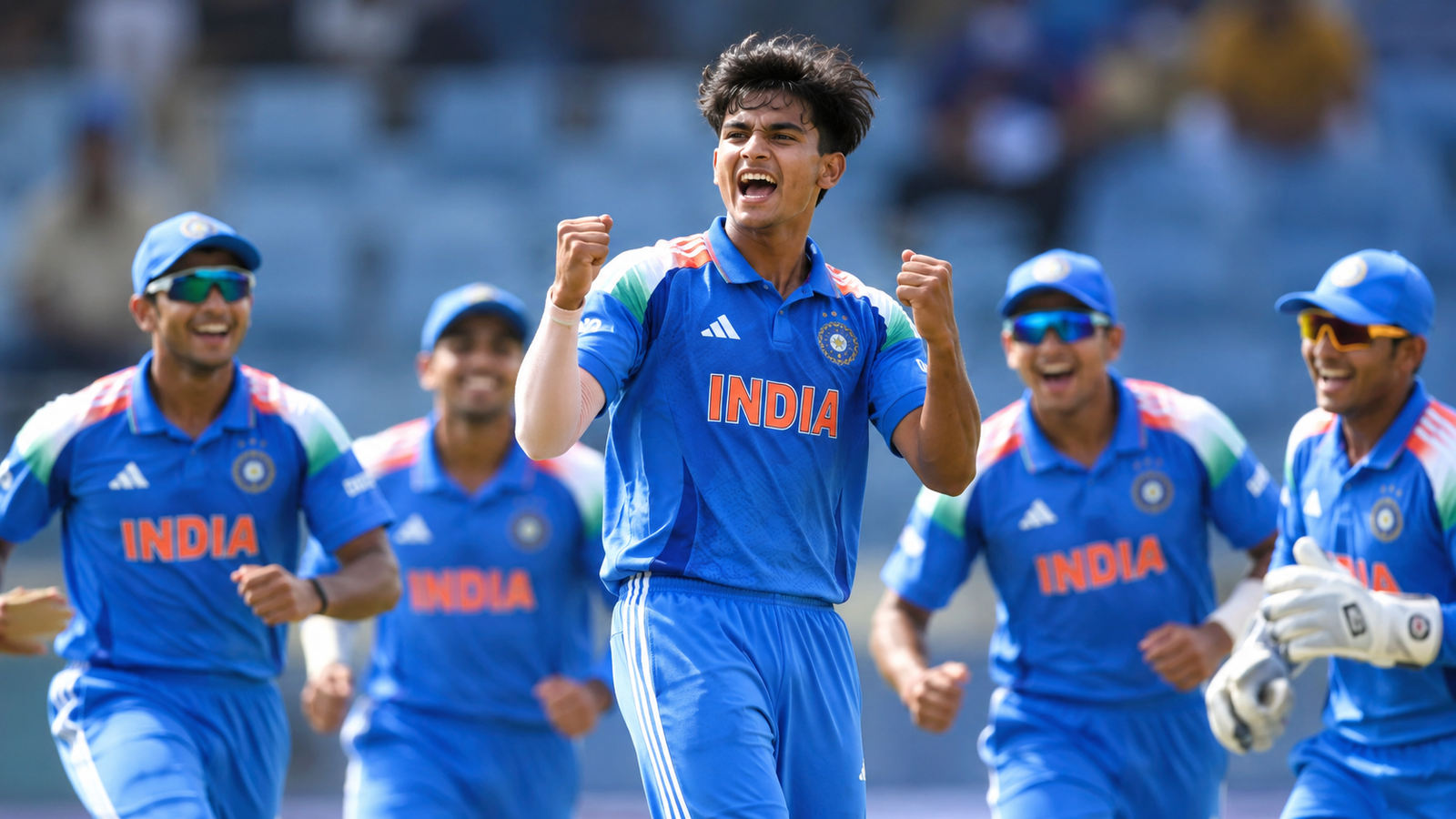

Tushar Deshpande hat-trick heroics helped Mumbai dominate Chandigarh in their Ranji Trophy 2026–27 fixture at the Wankhede Stadium in Mumbai on October 12, 2026. The right-arm fast bowler claimed five wickets for 17 runs in seven overs, including three consecutive dismissals, as Chandigarh were bowled out for 78 in their first innings.
The performance came on the second day of the match, which began on October 11. Mumbai had scored 429 in their first innings, giving them a 351-run lead before enforcing the follow-on. Deshpande’s bowling strengthened Mumbai’s position and made him the central figure in the day’s cricket.
The Tushar Deshpande hat-trick was particularly important because it came during a devastating collapse of Chandigarh’s batting order. Mumbai continued to apply pressure after the visitors returned to bat, leaving the match in a commanding position for the home side at stumps on day two.
Key Highlights
- Deshpande took five wickets for 17 runs in seven overs.
- His hat-trick included the dismissals of Arjun Azad, Shivam Bhambri and Dipender Kush.
- Chandigarh were dismissed for 78 in 19.1 overs.
- Mumbai scored 429 in their first innings, securing a 351-run lead.
- Mumbai enforced the follow-on, and Deshpande took another wicket in the second innings.
Table of Contents
- What Happened?
- Important Details
- Why Is This News Important?
- Latest Updates
- Official Statement and Sources
- Background and Context
- Reactions and Public Response
- What Happens Next?
- Frequently Asked Questions
- Conclusion
What Happened? Tushar Deshpande hat-trick Puts Mumbai in Command
The Tushar Deshpande hat-trick became the standout moment of Mumbai’s match against Chandigarh in the opening round of the Ranji Trophy season. Deshpande’s five-wicket haul helped Mumbai dismiss Chandigarh for only 78 runs, giving the hosts a substantial advantage after their first-innings batting performance.
Mumbai had resumed their first innings at 249 for five on the second day. The team eventually reached 429, with contributions from Siddhesh Lad, Musheer Khan, Tanush Kotian and Mohit Avasthi helping establish a competitive total.
Chandigarh needed a strong response to remain competitive. However, the visitors struggled against Mumbai’s bowling attack and lost wickets rapidly during their first innings.
How the Hat-Trick Unfolded
Deshpande began his contribution by dismissing Arslan Khan. He then produced the decisive sequence during the 11th over, taking three wickets with consecutive deliveries.
Arjun Azad was caught by Sylvester D’Souza. Shivam Bhambri was bowled on the next delivery, and Dipender Kush was caught by Yashasvi Jaiswal on the following ball. Those three consecutive dismissals completed the hat-trick and left Chandigarh at 25 for four.
The Tushar Deshpande hat-trick was significant because it disrupted the opposition’s chances of establishing a partnership. Three batters disappeared from the scorecard in quick succession, leaving the remaining players under immediate pressure.
Deshpande continued his effective spell after completing the hat-trick. He dismissed Raj Bawa for a duck, bringing his tally to five wickets in the innings. Chandigarh could not recover sufficiently, and Mumbai completed the innings by bowling out the visitors for 78 in 19.1 overs.
The Bowling Figures Behind the Performance
Deshpande finished with figures of 5/17 from seven overs. These numbers reflected both his ability to take wickets and his success in restricting the opposition’s scoring.
Mohit Avasthi supported him by claiming three wickets for nine runs in six overs. Sylvester D’Souza took two wickets, ensuring that Mumbai’s bowling attack maintained pressure throughout the innings.
The Tushar Deshpande hat-trick was therefore part of a collective team performance. While Deshpande provided the most memorable sequence, the supporting bowlers helped prevent Chandigarh from rebuilding their innings.
Mumbai’s Batting Contribution
Mumbai’s total of 429 provided the foundation for the match situation. Siddhesh Lad scored 86 runs, Musheer Khan contributed 65, and Tanush Kotian made 58. Mohit Avasthi added an unbeaten 54.
Deshpande also contributed with the bat, scoring 44 runs from 47 deliveries. His innings included four fours and two sixes, helping Mumbai extend their total before the bowling innings began.
The combination of batting and bowling made his performance especially notable. He contributed to Mumbai’s total and subsequently took five wickets, influencing both sides of the match.
Important Details
Who, What, When and Where?
The match featured Mumbai and Chandigarh in the 2026–27 Ranji Trophy Elite Group D competition. It was played at the Wankhede Stadium in Mumbai, with the opening day taking place on October 11 and the second day’s play on October 12, 2026.
Deshpande was the principal individual performer during Chandigarh’s first innings. His five wickets helped Mumbai secure a 351-run lead and enforce the follow-on.
Why Did Mumbai Enforce the Follow-On?
In first-class cricket, the follow-on allows a team with a sufficiently large first-innings lead to ask its opponent to bat again immediately. The decision depends on the match situation and the applicable competition regulations.
Mumbai’s lead of 351 runs placed them in a strong position to use this option. Instead of beginning a second innings themselves, they sent Chandigarh back to the crease.
The Tushar Deshpande hat-trick helped create the circumstances in which Mumbai could take this decision with confidence. The hosts had already built a large total and then dismissed Chandigarh for a comparatively small score.
What Made the Hat-Trick Special?
A hat-trick occurs when a bowler dismisses three batters with three consecutive deliveries. It is a rare achievement because every delivery must produce a dismissal, without another delivery or wicket interrupting the sequence.
Deshpande’s three dismissals involved different outcomes: a catch, a bowled dismissal and another catch. The sequence demonstrated how a bowler can create pressure through different methods rather than relying on one type of delivery.
His five-wicket haul added further importance to the achievement. Taking five wickets in a single innings is commonly described as a five-for or fifer in cricket.
The Significance of His First-Class Experience
Reports identified the fixture as Deshpande’s 50th first-class match. Experience in this format is valuable because players must adapt to extended spells, changing pitch conditions and different batting approaches.
The Tushar Deshpande hat-trick added another significant performance to his domestic record. However, one match cannot establish what his future selection opportunities will be, as those decisions depend on subsequent performances and team requirements.
Why Is This News Important?
It Strengthens Mumbai’s Position
Mumbai’s first-innings total of 429 placed pressure on Chandigarh from the beginning of the visitors’ innings. Dismissing Chandigarh for 78 then converted that batting advantage into a 351-run lead.
The Tushar Deshpande hat-trick was a crucial part of that change in momentum. It prevented Chandigarh from settling into a partnership and gave Mumbai an opportunity to finish the innings quickly.
Although a large lead does not guarantee victory in first-class cricket, it can provide a team with greater control over its strategy and the remaining time in a match.
It Demonstrates the Importance of Bowling Accuracy
Fast bowling requires more than pace. Bowlers must maintain control, choose appropriate lengths and exploit opportunities when batters make mistakes.
Deshpande’s figures of 5/17 demonstrated his effectiveness during this innings. He took wickets while keeping the number of runs conceded relatively low, and his consecutive dismissals prevented Chandigarh from stabilising their score.
For young cricketers, the performance provides an example of how accuracy and consistency can complement wicket-taking ability.
It Brings Attention to Domestic Cricket
The Ranji Trophy is India’s leading domestic first-class cricket competition, organised by the Board of Control for Cricket in India. It provides a platform for players representing domestic teams to compete in the longer format.
The Tushar Deshpande hat-trick attracted attention to the competition because it was an individual achievement with a direct impact on the match. Strong domestic performances also help readers follow players beyond international fixtures and franchise tournaments.
However, the significance of the performance should be assessed through confirmed statistics rather than assumptions about future selection or career outcomes.
Latest Updates
The confirmed sequence of events reported on October 12, 2026, was:
- October 11: Mumbai’s match against Chandigarh began at the Wankhede Stadium.
- October 12: Mumbai resumed at 249 for five and completed their first innings at 429.
- October 12: Deshpande took five wickets for 17 runs, including three consecutive dismissals.
- October 12: Chandigarh were dismissed for 78, leaving Mumbai with a 351-run lead.
- October 12: Mumbai enforced the follow-on.
- End of day two: Deshpande dismissed Vishu Kashyap in Chandigarh’s second innings, leaving the visitors at 0 for one at stumps.
These developments establish Mumbai’s commanding position at the end of the second day. A final result should be added only after it has been confirmed by a reliable subsequent report.
Official Statement and Sources
The match details in this report are based on published sports coverage and reported score information. The Indian Express and Moneycontrol covered Deshpande’s performance and Mumbai’s advantage against Chandigarh.
The Board of Control for Cricket in India is the governing organisation responsible for India’s domestic cricket competitions. Readers can use its official website to check domestic cricket announcements and competition information.
Relevant sources include:
- BCCI Official Website
- Mumbai Cricket Association
- The Indian Express – Match Report
- Moneycontrol – Ranji Trophy Match Report
The Tushar Deshpande hat-trick was reported by sports news outlets, but no direct quotation from Deshpande has been verified for this article. No personal reaction has therefore been attributed to him.
Background and Context
What Is the Ranji Trophy?
The Ranji Trophy is India’s premier domestic first-class cricket championship. Named after Indian cricketer Ranjitsinhji, the tournament has a long history and remains an important part of the country’s domestic cricket structure.
The competition began in the 1934–35 season. Its format and group arrangements have evolved over time, allowing domestic teams to compete through organised stages and pursue the championship.
Unlike limited-overs cricket, first-class matches are played over multiple days. Players must maintain concentration, manage their physical effort and adapt to changing match conditions.
For fast bowlers, this format creates different demands from T20 cricket. They must remain effective across longer spells, maintain control and identify the right moments to attack.
Tushar Deshpande’s Domestic Cricket Career
Deshpande is an Indian right-arm fast bowler who has represented Mumbai in domestic cricket. He has also played in the Indian Premier League, gaining experience in a format that requires different tactical decisions.
His professional career includes playing for Chennai Super Kings during their 2023 IPL title-winning campaign. Franchise cricket and first-class cricket place different demands on bowlers, making performances across formats useful indicators of their adaptability.
The Tushar Deshpande hat-trick also highlighted his contribution to Mumbai’s domestic campaign. His ability to take wickets in a first-class match complemented his earlier batting contribution of 44 runs.
A player’s long-term prospects, however, depend on continued performance, fitness, competition for places and the requirements of the relevant team.
Mumbai’s Importance in Domestic Cricket
Mumbai has historically been one of the most successful teams in the Ranji Trophy. The team’s history makes its domestic performances an important subject for followers of Indian cricket.
Nevertheless, historical success does not determine the outcome of an individual fixture. In this match, Mumbai’s advantage came from their current performance: 429 runs in the first innings followed by dismissing Chandigarh for 78.
That 351-run lead enabled Mumbai to enforce the follow-on. The score difference, rather than reputation alone, explains why the hosts were in control at the end of day two.
How a Hat-Trick Can Change an Innings
A hat-trick can change an innings by removing several batters before the batting side has time to establish a partnership. It also increases pressure on the players who remain at the crease.
In Chandigarh’s case, Deshpande’s three consecutive wickets left the side at 25 for four. His later dismissal of Raj Bawa contributed to the team’s further decline, while the other Mumbai bowlers maintained their effectiveness.
The Tushar Deshpande hat-trick was important, but it did not independently decide the match. Mumbai still needed to dismiss the remaining batters, and Chandigarh had another innings in which to respond.
This distinction matters when reporting multi-day cricket. A dominant position is not the same as a confirmed victory, and the final outcome must be established from the completed match scorecard.
Reactions and Public Response
Sports news outlets highlighted Deshpande’s five-wicket haul and Mumbai’s commanding position. The coverage focused on the sequence of consecutive wickets, Chandigarh’s low total and the resulting first-innings lead.
No verified direct reaction from Deshpande or an official team representative has been established for this article. Similarly, a specific measure of fan response is unavailable, so claims about public opinion would be speculative.
The strongest confirmed takeaway remains the performance itself: Deshpande took five wickets for 17 runs, and Mumbai dismissed Chandigarh for 78.
What Happens Next?
Mumbai’s immediate objective was to complete the match after enforcing the follow-on. Chandigarh had lost one wicket in their second innings by stumps on day two, leaving the visitors with the task of producing a stronger response.
Mumbai needed to take the remaining wickets to convert their advantage into a completed match result. Chandigarh needed partnerships and a substantial improvement in batting performance to make the contest more competitive.
The Tushar Deshpande hat-trick strengthened Mumbai’s position, but the eventual result and subsequent second-innings figures should be checked against updated reporting before publication.
For Deshpande, the performance adds to his domestic record. Whether it leads to further opportunities depends on future results and selection decisions, which cannot be predicted from one innings alone.
Frequently Asked Questions (FAQs)
1. When did Tushar Deshpande take a hat-trick in the Ranji Trophy?
Deshpande took his hat-trick against Chandigarh on October 12, 2026, during the second day of Mumbai’s opening-round fixture in the 2026–27 Ranji Trophy season. The match was played at the Wankhede Stadium in Mumbai.
2. What were Tushar Deshpande’s bowling figures?
Deshpande finished Chandigarh’s first innings with five wickets for 17 runs in seven overs. His performance included three consecutive dismissals. Mohit Avasthi claimed three wickets, while Sylvester D’Souza took two as Mumbai dismissed Chandigarh for 78.
3. Who were the three batters dismissed in the hat-trick?
Arjun Azad, Shivam Bhambri and Dipender Kush were dismissed in consecutive deliveries. Azad was caught, Bhambri was bowled, and Kush was caught by Yashasvi Jaiswal. The sequence left Chandigarh struggling at 25 for four.
4. Why was Chandigarh bowled out for 78 runs?
Chandigarh lost wickets rapidly against Mumbai’s bowling attack. Deshpande took five wickets, Avasthi claimed three and D’Souza took two. The combined performance prevented the visitors from building partnerships and resulted in their dismissal in 19.1 overs.
5. What was Mumbai’s first-innings score?
Mumbai scored 429 in their first innings. Siddhesh Lad made 86, Musheer Khan scored 65, Tanush Kotian contributed 58 and Mohit Avasthi remained unbeaten on 54. Deshpande also scored 44 runs, helping the hosts establish a substantial total.
6. Why was the Tushar Deshpande hat-trick important for Mumbai?
The Tushar Deshpande hat-trick helped Mumbai dismiss Chandigarh for 78 and establish a 351-run first-innings lead. Mumbai enforced the follow-on and took another wicket before stumps on day two. The performance gave the hosts a commanding advantage, although a final result still required confirmation.
7. Was this Deshpande’s 50th first-class match?
Published reports identified the Chandigarh fixture as Deshpande’s 50th first-class match. He marked the occasion with five wickets, a hat-trick and 44 runs in Mumbai’s first innings. Updated career statistics should be checked against a reliable cricket database.
8. Where can readers find official Ranji Trophy updates?
Readers can check the BCCI’s official website for domestic cricket announcements and the Mumbai Cricket Association website for Mumbai cricket information. Established sports news outlets also publish match reports, score updates and confirmed developments throughout the Ranji Trophy season.
Conclusion
The Tushar Deshpande hat-trick was the standout individual achievement in Mumbai’s match against Chandigarh on October 12, 2026. His five wickets for 17 runs helped restrict Chandigarh to 78 after Mumbai had scored 429 in their first innings.
Deshpande also contributed 44 runs with the bat, making his performance valuable in both innings of the match. Mumbai held a 351-run lead and had enforced the follow-on by the end of day two.
The key takeaway is that a strong batting foundation combined with accurate, attacking bowling can give a team considerable control in first-class cricket. The final result should be confirmed through an updated scorecard before the story is revised.
For more latest sports news, match updates, and breaking sports stories, visit WorldPlayHub.