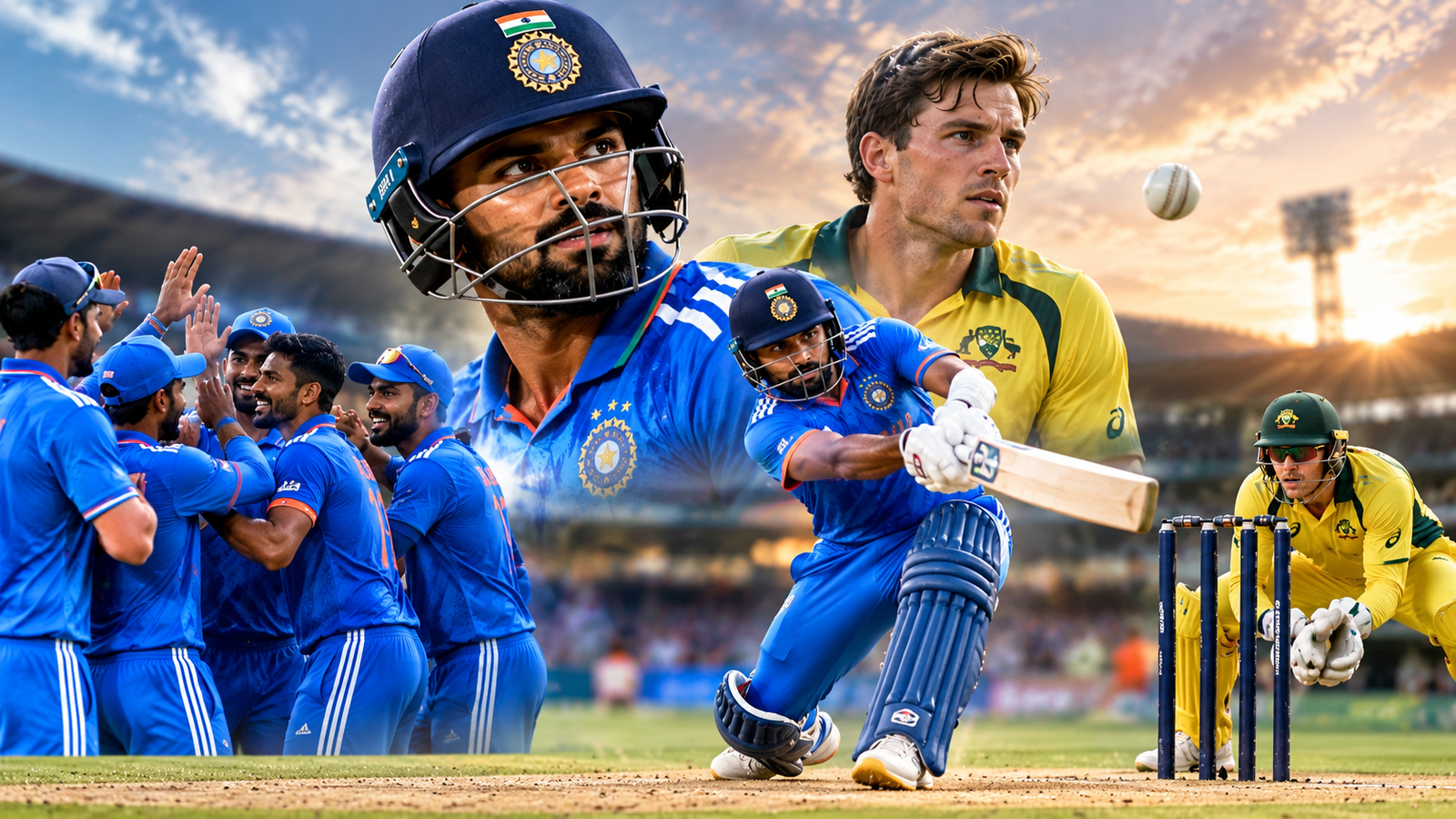
The India A vs Australia A contest moves into a new phase on October 6 as the two sides begin their three-match unofficial ODI series in Puducherry. After two four-day matches earlier in the tour, both teams now turn their attention to the 50-over format, giving several players an important opportunity to make a strong impression ahead of future international assignments.
India A will be led by Ruturaj Gaikwad, who brings recent international experience into the series. The squad also includes players such as Sai Sudharsan, Devdutt Padikkal, Rajat Patidar, Priyansh Arya, Prabhsimran Singh and other promising domestic performers. Australia A, meanwhile, arrive with a competitive group featuring Sam Konstas, Josh Philippe, Nathan McSweeney, Nikhil Chaudhary, Mitchell Owen, Will Sutherland, Spencer Johnson and other players with domestic and international experience.
The first India A vs Australia A unofficial ODI is being played at the Cricket Association Puducherry Siechem Ground. The match is part of Australia’s wider A-team tour of India, which is designed to provide valuable exposure to players from both sides.
The series is particularly important because India A and Australia A are not simply playing for a result. These matches also provide selectors with another opportunity to assess players who could become important options for their respective senior teams.
India A vs Australia A: First ODI Begins a New Challenge
The India A vs Australia A series has attracted attention because both squads contain several players who have already appeared at the senior level or are considered potential future international options.
The first unofficial ODI is scheduled for October 6 in Puducherry. The second match will be played on October 9, followed by the third and final match on October 11. All three games are scheduled at the Cricket Association Puducherry Siechem Ground.
The change from four-day cricket to one-day cricket creates a completely different challenge.
In the longer format, batters have more time to build an innings and bowlers can work through extended spells. In the 50-over game, players have to make decisions much faster. Batters need to manage the powerplay, middle overs and final phase, while bowlers must find ways to control scoring without losing attacking intent.
For India A, this makes the India A vs Australia A series an interesting test of adaptability.
Ruturaj Gaikwad’s leadership will also be closely watched. He has considerable experience in domestic cricket and has recently been involved with India’s senior white-ball setup. His role in the India A squad is therefore about more than scoring runs. He will also be expected to guide a group containing several younger players.
Australia A will have a similar objective. The visitors have a mixture of experienced domestic cricketers and younger players looking to move closer to international cricket.
Ruturaj Gaikwad Takes Charge of India A
Ruturaj Gaikwad will captain India A in the three-match unofficial ODI series against Australia A.
Gaikwad’s selection gives the Indian side an experienced top-order batter and a captain who understands the demands of modern limited-overs cricket. His recent involvement with the senior Indian team also adds another layer of interest to the India A vs Australia A series.
The captain will be expected to provide stability at the top of the order while also helping the younger members of the squad understand the demands of the 50-over game.
India A’s batting group has considerable depth. Sai Sudharsan, Devdutt Padikkal and Rajat Patidar have all played at a high level, while Priyansh Arya and other younger batters have opportunities to make their own statements.
The presence of several players with senior-team experience makes India A a strong-looking side on paper.
However, cricket is not decided by names alone.
Australia A have enough bowling options to test the Indian batting lineup, particularly in the early overs. Their fast bowlers can use pace and bounce, while their spin options could become important as the innings progresses.
That is why Gaikwad’s role will be important. He will need to judge conditions quickly and make the right decisions according to the match situation.
Sai Sudharsan Returns to the 50-Over Format
One of the most interesting names in the India A vs Australia A series is Sai Sudharsan.
The left-handed batter has already established himself as a player capable of performing at a high level. He has also represented India at international level and has continued to develop his game across formats.
Sudharsan is returning to the 50-over format after a period in which injuries and red-ball commitments limited his opportunities. His return for India A provides him with an important chance to spend more time in the middle and build rhythm in List A cricket.
For a batter like Sudharsan, these matches can be valuable because they allow him to work on different aspects of his game without the immediate pressure of a major international series.
He can focus on building innings, rotating the strike, attacking when required and understanding how to manage the middle overs.
His performance could become one of the main talking points of the India A vs Australia A series.
Hardik Pandya Ruled Out Before the Series
One major change to the India A squad came before the start of the ODI series.
Hardik Pandya was initially included in the squad but was ruled out after suffering an injury. Suryansh Shedge was named as his replacement.
Pandya’s absence changes the balance of the India A squad.
He would have provided experience as an all-rounder, giving the captain another option with both bat and ball. His withdrawal means other players now have to take on greater responsibility.
Suryansh Shedge is one player who receives a major opportunity as a result.
The Mumbai all-rounder has been brought into the squad at an important moment. Although replacing an established international player is never a simple task, the situation gives Shedge a platform to demonstrate his abilities against a strong Australia A side.
This is one of the reasons the India A vs Australia A series is important for emerging players.
A good performance can create momentum. A consistent run of performances can also bring a player closer to higher-level opportunities.
India A’s Pace Bowling Under the Spotlight
The Indian pace attack is another area worth watching during the India A vs Australia A series.
Young fast bowlers such as Gurjapneet Singh, Arshad Khan and Yash Thakur are among the players who can use these matches to push their claims.
Modern ODI cricket is becoming increasingly demanding for fast bowlers.
Teams regularly target big totals, and the final overs can become particularly difficult. Bowlers need variations, control and the ability to adapt to changing conditions.
India’s recent ODI cricket has also highlighted the importance of having a deep pace-bowling group. That makes the India A opportunity particularly valuable for bowlers who are trying to establish themselves.
The conditions in Puducherry could provide another interesting test.
Fast bowlers will need to assess the surface quickly. If there is little assistance from the pitch, accuracy becomes even more important. At the same time, bowlers cannot simply defend throughout an innings because ODI cricket can change rapidly.
For India A, the India A vs Australia A matches could therefore provide useful information about which bowlers are ready for bigger challenges.
Australia A Arrive With Strong White-Ball Options
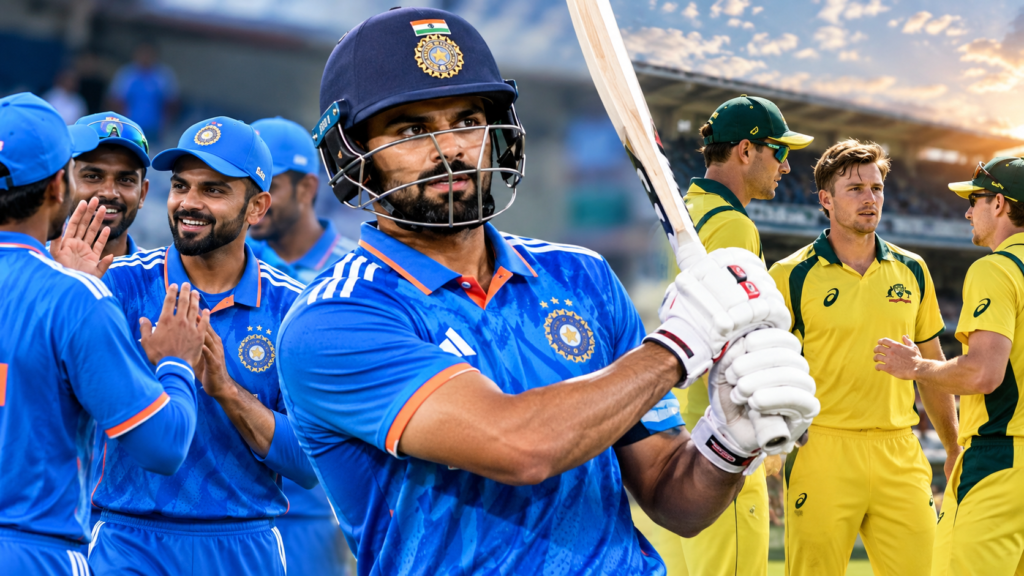
Australia A also have plenty of players worth watching.
Sam Konstas is one of the most recognisable young names in the Australian group. Josh Philippe provides wicketkeeping and batting experience, while Nathan McSweeney and Nikhil Chaudhary add further batting options.
Mitchell Owen and Will Sutherland can provide all-round ability, giving Australia A flexibility in their team combination.
The bowling department also contains interesting options, including Spencer Johnson, Riley Meredith, Todd Murphy, Tanveer Sangha and Ben Dwarshuis.
The Australian squad was adjusted before the ODI series, with Riley Meredith and Will Sutherland coming into the group while other players became unavailable.
This depth means India A cannot afford to focus on only one or two Australian players.
The India A vs Australia A contest could develop into a battle between India’s batting depth and Australia’s varied bowling attack.
At the same time, Australia’s own batting lineup will face a strong test against India’s young fast bowlers and spin options.
What Happened in the Earlier Four-Day Matches?
The ODI series follows two four-day matches between India A and Australia A.
India A won the first four-day match by 162 runs after scoring 334 in their first innings and dismissing Australia A for 171.
The second four-day match ended in a draw.
Australia A made 358 in the first innings, while India A scored 167. Australia A then declared their second innings at 173 for four, leaving India A with a difficult final-day challenge. India A survived to finish on 310 for nine, securing a draw.
Those results provide some context heading into the India A vs Australia A ODI series.
India A will enter the one-day matches having already won one match on the tour and drawn another. Australia A, meanwhile, will be looking for a stronger result in the shorter format.
However, the ODI series should be treated as a fresh contest.
The conditions may be similar, but the tactical demands are completely different.
Why the India A vs Australia A Series Matters
At first glance, an unofficial ODI between two A teams may appear less important than an international match.
But A-team cricket plays an important role in developing the next generation of international players.
For India, the India A vs Australia A series provides opportunities to test players against a strong overseas side without immediately placing them into the pressure of senior international cricket.
It also allows selectors to compare players in competitive conditions.
A batter may score heavily in domestic cricket, but performing against an Australia A attack provides a different challenge.
Similarly, a bowler may take wickets regularly at domestic level but needs to show whether he can maintain control against international-quality batters.
That is why performances in A-team cricket can be significant.
Players are not only competing for match results. They are also competing for future opportunities.
Priyansh Arya Gets Another Opportunity
Priyansh Arya is another player attracting attention ahead of the India A vs Australia A ODI series.
Arya is known for an aggressive style of batting and has been included in India’s squad for the three one-day matches.
The 50-over format gives him an opportunity to show that his attacking approach can also be controlled and effective over a longer innings.
Modern limited-overs cricket rewards aggressive batting, but successful ODI batters also need to understand when to attack and when to rotate the strike.
That balance will be important for Arya.
If he can provide India A with fast starts while also converting opportunities into substantial scores, his performance could become one of the positive stories from the series.
Devdutt Padikkal Adds Experience
Devdutt Padikkal is another important part of the India A batting lineup.
Padikkal has experience at domestic level and has also represented India. His left-handed batting style gives the lineup another option at the top and middle of the order.
His role could become particularly important if India A lose an early wicket.
In that situation, India A will need a batter capable of rebuilding the innings without allowing the scoring rate to fall too much.
Padikkal has the experience to handle that responsibility.
His partnership with players such as Gaikwad and Sudharsan could become an important part of India’s batting strategy during the India A vs Australia A series.
Rajat Patidar Remains a Key Batter
Rajat Patidar is another senior-level name in the India A squad.
His ability to play attacking cricket while also building an innings makes him an important option in the middle order.
If India’s top order provides a solid start, Patidar could be asked to accelerate later in the innings.
If early wickets fall, his responsibility could instead be to rebuild.
That flexibility makes him valuable in ODI cricket.
The India A vs Australia A series therefore provides Patidar with another opportunity to show that he can perform consistently in different match situations.
Australia A’s Josh Philippe Could Be Important
From Australia’s perspective, Josh Philippe is one of the players who could play an important role.
The wicketkeeper-batter has considerable experience in Australian domestic cricket and has played high-level white-ball cricket.
His ability to score quickly makes him a potentially dangerous player for India A.
Australia A will want their top order to establish a strong platform, and Philippe can help them do that.
The battle between India’s new-ball bowlers and Australia’s top-order batters could be one of the defining contests of the India A vs Australia A series.
If India can take early wickets, they may be able to put Australia A under pressure.
If Australia A’s openers survive the first phase, the visitors have enough batting depth to build a large total.
Conditions in Puducherry Could Influence the Match
The Cricket Association Puducherry Siechem Ground will host the ODI series.
Playing conditions can have a significant impact on an unofficial ODI.
Batters will need to understand the pace of the surface, while bowlers will need to assess how much movement or grip is available.
The team batting first may want to make full use of the powerplay before building a strong middle-overs platform.
The final overs could then become an opportunity to push the score significantly higher.
For the bowling side, controlling boundaries will be critical.
The India A vs Australia A matches could therefore become a good tactical examination for both teams.
The Importance of the First 10 Overs
The first 10 overs could be particularly important.
In ODI cricket, the opening phase often establishes the direction of the innings.
India A have several aggressive batting options, but Australia A also have fast bowlers capable of challenging the top order.
The opening partnership will therefore be closely watched.
If India A’s openers get through the initial spell without losing wickets, they can put the team in a strong position.
If Australia A strike early, India’s middle order will have to take greater responsibility.
The same applies when Australia A bat.
India’s young pacers will be looking for early breakthroughs because removing one or two top-order batters can change the entire structure of an ODI innings.
Middle Overs Could Decide the Contest
The middle overs are often where ODI matches are won or lost.
This is when teams have to balance risk and reward.
Batters need to keep the scoreboard moving without giving away unnecessary wickets.
Bowlers need to prevent easy singles while creating pressure.
Spinners could play an important role during this phase, especially if the pitch offers some grip.
For India A, players such as Vipraj Nigam and other bowling options could become important.
Australia A also have spin resources, including Todd Murphy and Tanveer Sangha.
The battle in the middle overs could therefore provide one of the most interesting tactical elements of the India A vs Australia A series.
What Happens Next After the First ODI?
The India A vs Australia A series does not end with the first match.
The second unofficial ODI is scheduled for October 9, followed by the third match on October 11.
Both matches are also scheduled in Puducherry.
That gives players very little time to recover and make adjustments.
A strong performance in the first game can create momentum for the rest of the series.
At the same time, a player who struggles in the opening match will have another opportunity to respond.
This is particularly useful for young cricketers.
Instead of being judged on one performance, they get a three-match series in which they can demonstrate consistency.
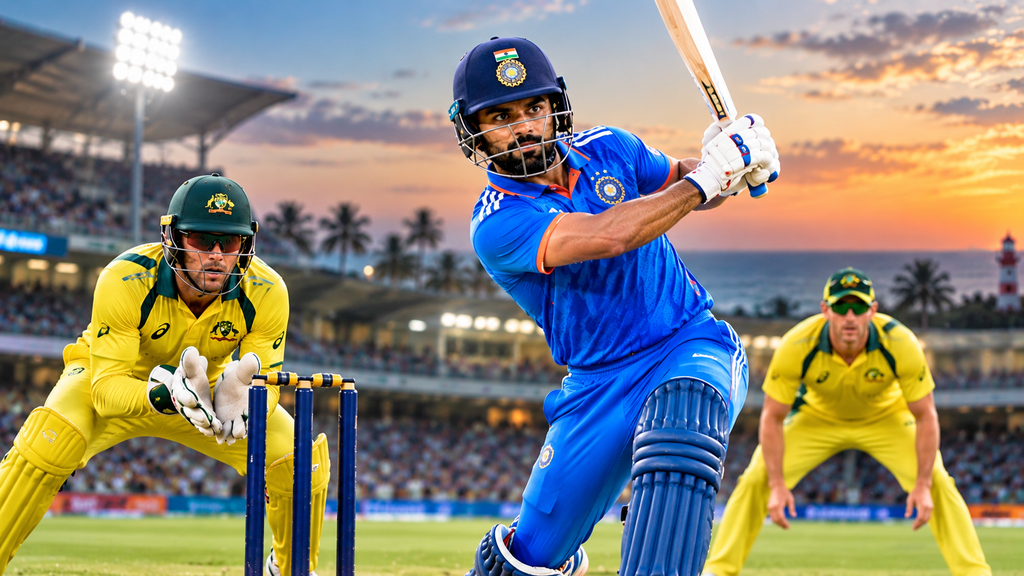
India A vs Australia A: Players to Watch
Several names could become important throughout the series.
For India A, Ruturaj Gaikwad is naturally one of the main players to watch because of his leadership role.
Sai Sudharsan will attract attention because of his return to the 50-over format.
Devdutt Padikkal and Rajat Patidar provide experience in the batting department.
Priyansh Arya is an exciting younger batting option.
Among the bowlers, Gurjapneet Singh, Arshad Khan and Yash Thakur have an opportunity to make a strong impression.
For Australia A, Sam Konstas and Josh Philippe are important names in the batting group.
Nathan McSweeney provides further experience, while Mitchell Owen and Will Sutherland can contribute in multiple areas.
Spencer Johnson, Riley Meredith, Todd Murphy and Tanveer Sangha give Australia A different bowling options.
India A vs Australia A Is More Than Just a Practice Series
The term “unofficial” can sometimes make A-team cricket sound less significant.
In reality, these matches can be extremely important for players who are trying to reach international cricket.
Every run, wicket, catch and performance adds to a player’s record.
Selectors can use these matches to evaluate players in conditions that are closer to international cricket than many domestic games.
For India, the series could provide information about the next group of players competing for senior-team places.
For Australia, the same is true.
The India A vs Australia A series therefore has a bigger purpose than simply deciding who wins three matches.
It is also about development, selection and preparation.
A Chance for India A to Build Momentum
India A already have a positive result from the earlier part of the tour, having won the first four-day match.
Now the focus moves completely to white-ball cricket.
A strong start in the first ODI would give Ruturaj Gaikwad and his team confidence heading into the next two matches.
India A will want their batting unit to establish consistency, while the bowlers will be expected to adapt quickly to the demands of the 50-over format.
The absence of Hardik Pandya means the team has to find another way to maintain balance.
That challenge could actually become an opportunity for younger all-rounders to show what they can offer.
Australia A Looking for a Response
Australia A will have their own motivation.
After India A won the first four-day match and the second ended in a draw, the visitors will be eager to make their mark in the ODI series.
The Australian players have enough experience to make the contest competitive.
Their fast bowling attack could be particularly important in the early stages, while their batting lineup has several players capable of scoring quickly.
A strong performance in Puducherry would give Australia A momentum for the remainder of the tour.
What Fans Should Expect From India A vs Australia A
The India A vs Australia A series should provide competitive cricket, emerging talent and several individual battles worth following.
India A have a batting-heavy squad with players who understand Indian conditions.
Australia A have a balanced group containing players familiar with high-level Australian cricket.
The difference could come down to execution.
The team that handles pressure better, rotates the strike more efficiently, takes its catches and controls the final overs will have a significant advantage.
There is also a strong possibility that individual performances will become as important as the final result.
A century from a young batter or a five-wicket haul from a developing fast bowler could have consequences beyond this series.
India A vs Australia A: Final Outlook
The first India A vs Australia A unofficial ODI in Puducherry begins an important three-match white-ball contest between two development sides packed with players looking toward bigger opportunities.
India A enter the series under Ruturaj Gaikwad’s leadership, with Sai Sudharsan, Devdutt Padikkal and Rajat Patidar giving the batting order considerable experience.
Australia A have their own strong group, including Sam Konstas, Josh Philippe, Nathan McSweeney and a varied bowling attack.
The absence of Hardik Pandya is an important development for India A, but Suryansh Shedge’s inclusion gives another player the chance to make a mark.
The series also provides young Indian fast bowlers with an opportunity to show their ability in 50-over cricket.
With the second ODI scheduled for October 9 and the third for October 11, there will be little time between matches. That means adaptability and consistency will be crucial.
For fans following the India A vs Australia A series, the biggest story may not simply be who wins the first ODI. The performances of players such as Sai Sudharsan, Priyansh Arya, Suryansh Shedge, Gurjapneet Singh, Sam Konstas and Josh Philippe could shape the conversation around future selections.
The first match is therefore an important starting point.
India A will want to use home conditions and their batting strength to take control, while Australia A will look to challenge the hosts with their pace, variety and competitive approach.
As the three-match series develops, every performance will matter.
And for the players involved, India A vs Australia A could be another important step toward earning a place on the international stage.
India A vs Australia A 2026: Key Details
Match: India A vs Australia A, 1st Unofficial ODI
Date: October 6, 2026
Venue: Cricket Association Puducherry Siechem Ground, Puducherry
India A Captain: Ruturaj Gaikwad
Australia A: Australia A
Series: Australia A tour of India 2026
Format: 50-over cricket
Second ODI: October 9, 2026
Third ODI: October 11, 2026
The official BCCI match centre lists the first one-day match in Puducherry on October 6.
India A vs Australia A: The Bigger Picture
The importance of India A vs Australia A goes beyond the scorecard.
India A vs Australia A For established players, the series is a chance to regain rhythm and demonstrate consistency.
For younger players, it is an opportunity to show selectors that they are ready for the next level.
For fans, it is a chance to watch several future international players before they become regular names on the biggest stage.
That combination makes the India A vs Australia A series one of the more interesting domestic-level cricket contests to follow in October 2026.
With three matches scheduled in Puducherry, the series should provide enough opportunities for both teams to test their combinations, identify their strongest players and build momentum for future assignments.
The first ODI is only the beginning.
For more latest sports news, match updates, and breaking sports stories, visit WorldPlayHub.
Latest Sports News, Scores & Updates — SACHKIKHABAR