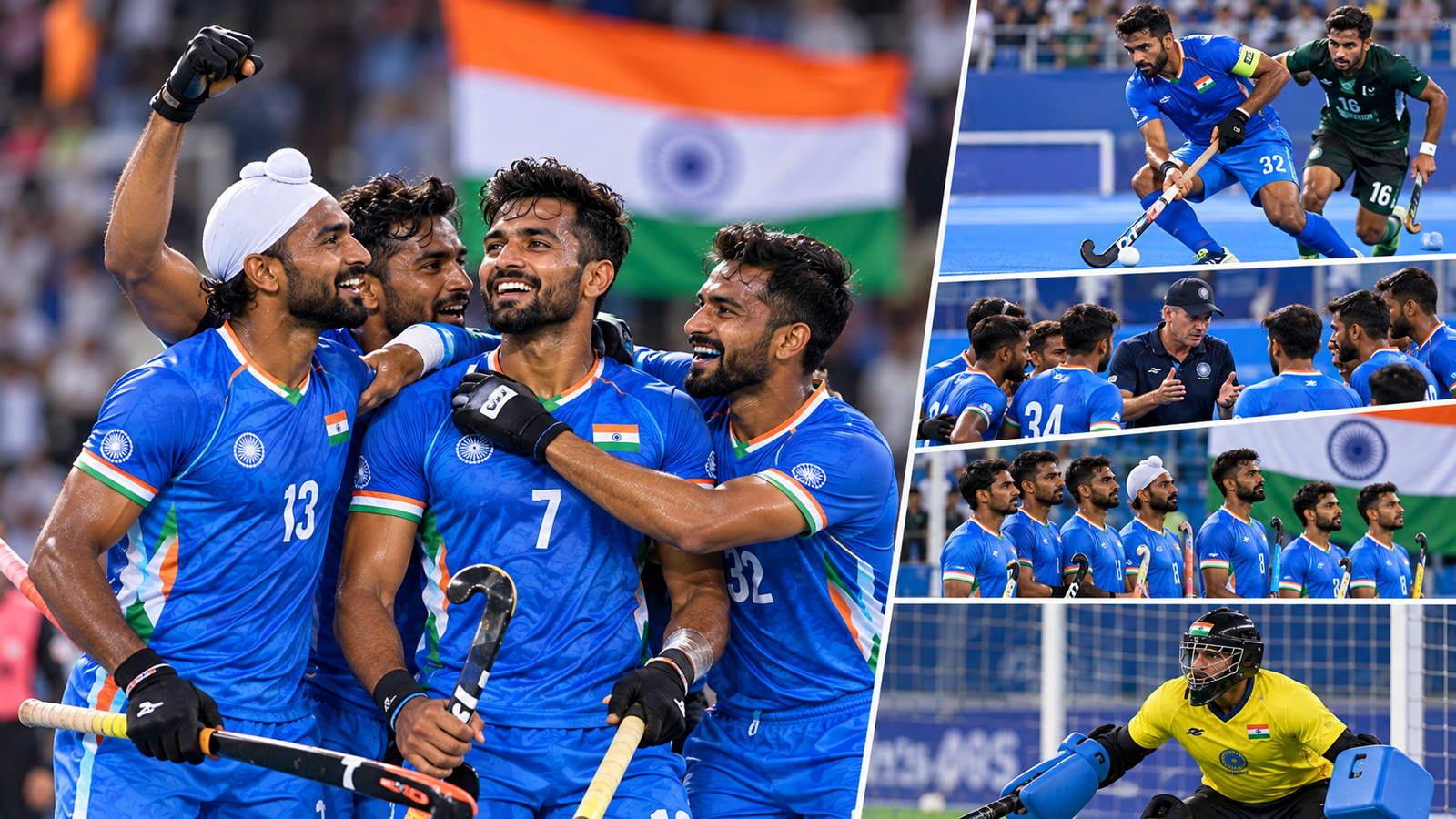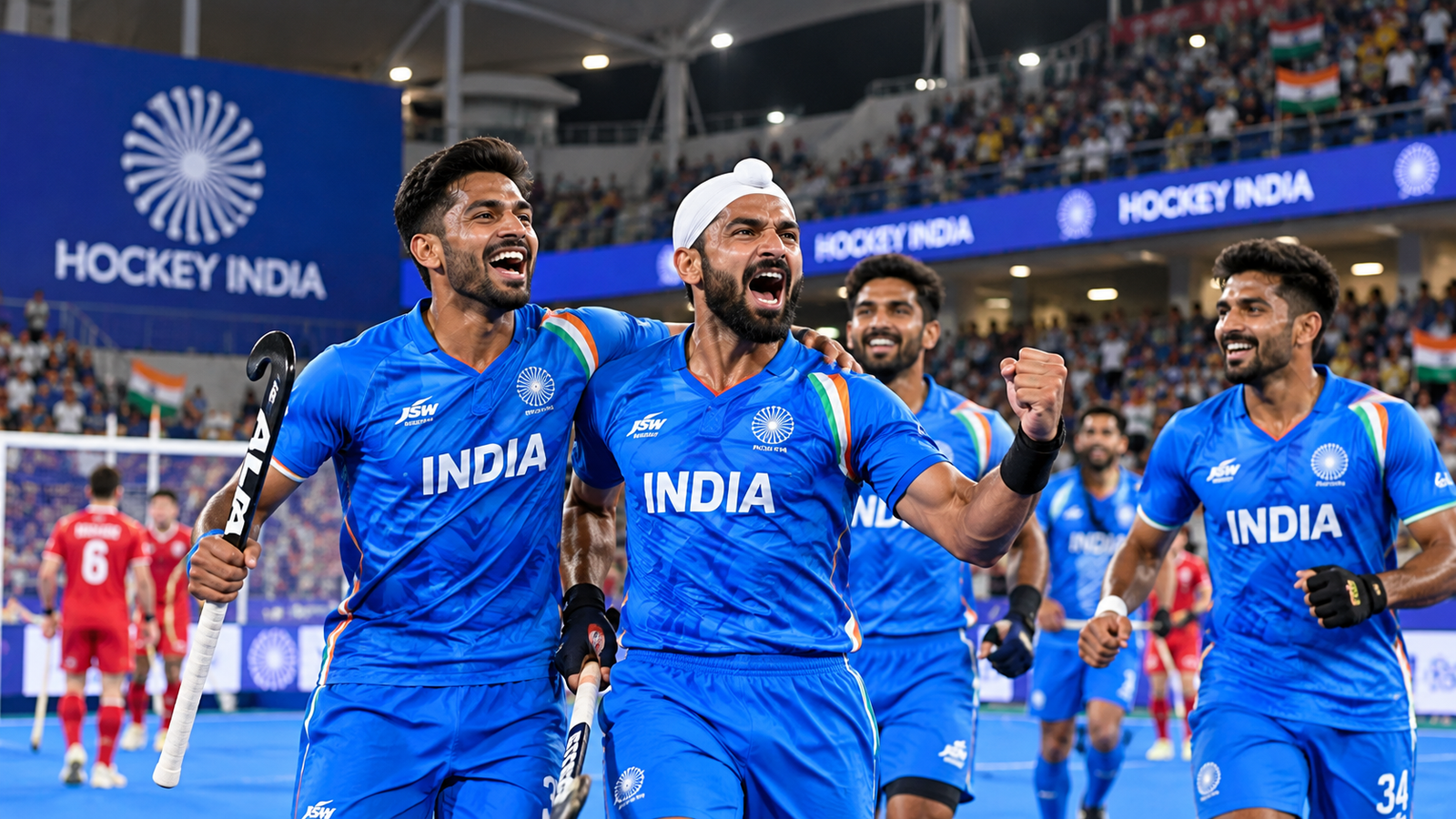
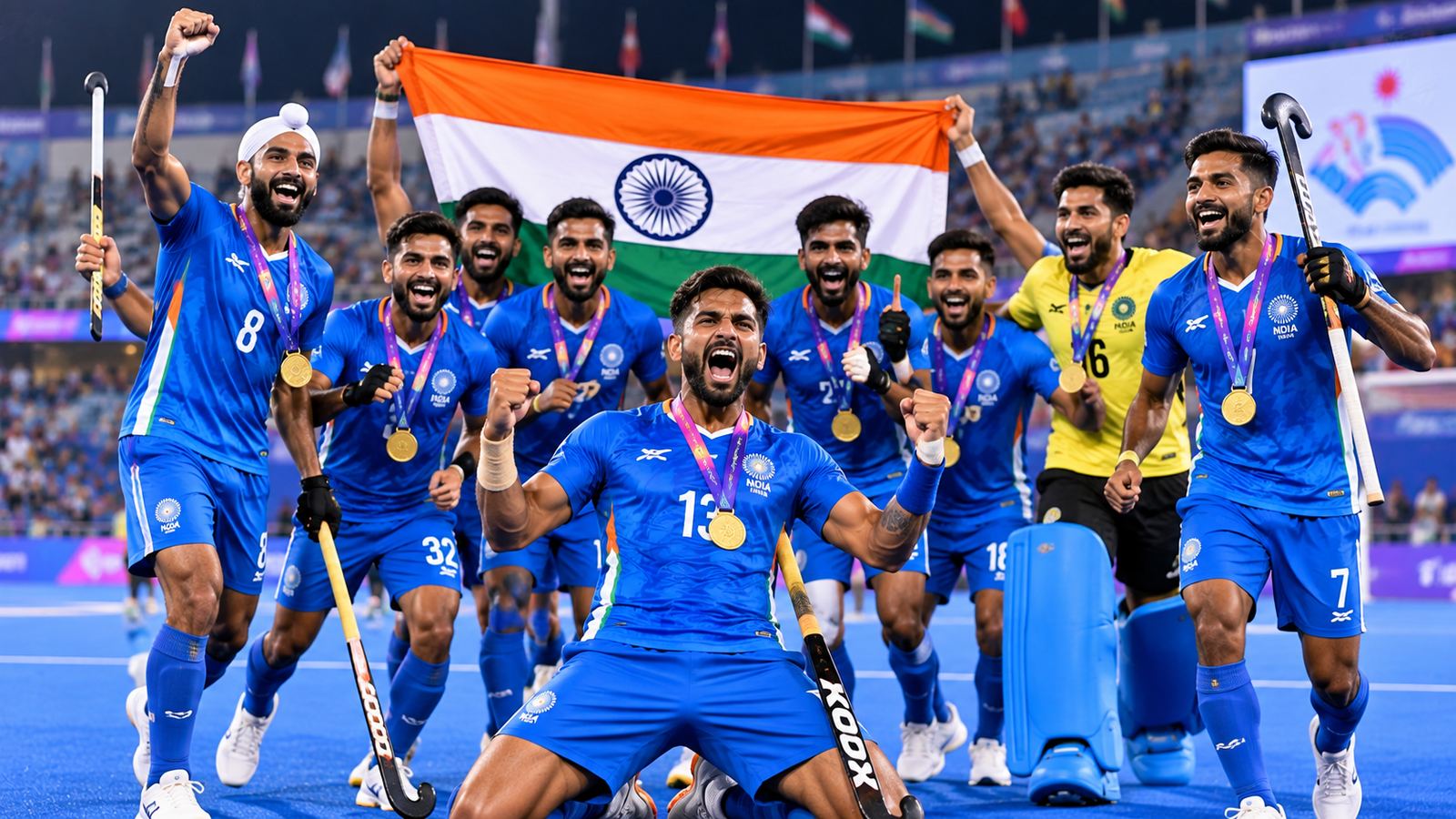
The Indian Men’s Hockey Team has moved quickly from celebration to preparation after one of the biggest achievements in its recent history. India defeated Malaysia 5-1 in the men’s hockey final at the 2026 Asian Games in Aichi-Nagoya, successfully defending the title and securing direct qualification for the Los Angeles 2028 Olympic Games. The result gave India another major continental title and, just as importantly, removed the need to go through an Olympic qualifying tournament.
The victory has now opened a new chapter for the Indian Men’s Hockey Team. Head coach Craig Fulton said on October 5 that the next phase will involve building a fresh squad after the Hockey India League, with a stronger focus on balancing experienced internationals with younger players from the India A and Under-21 pathways.
That makes the Asian Games gold both an achievement and a starting point. India have the title, the Olympic ticket and the confidence that comes with beating Malaysia 5-1 in the final. The next challenge is to turn that success into sustained progress before Los Angeles.
Indian Men’s Hockey Team: What Happened in the Asian Games Final?
The Indian Men’s Hockey Team: produced a controlled second-half performance against Malaysia in the gold-medal match on October 3, 2026. India scored first, conceded an equaliser, and then gradually took complete control of the contest.
Captain Harmanpreet Singh opened the scoring in the 11th minute through a penalty corner. Malaysia responded through Shello Silverius, who finished from open play to make it 1-1. That equaliser could have made the final tense, but India reacted well.
Jugraj Singh restored the lead in the 23rd minute with another penalty-corner conversion. The goal gave India a 2-1 advantage before the second half and allowed the team to settle back into its structure.
After the interval, Hardik Singh extended the lead from a penalty stroke in the 42nd minute. Shilanand Lakra then scored in the 54th minute before Harmanpreet completed his brace in the 57th minute. The final score was 5-1.
The margin was important because it showed that India did not merely survive the final. Once the team moved ahead, it continued to create pressure and chances instead of allowing Malaysia to return to the contest.
Indian Men’s Hockey Team: When and Where Did the Final Take Place?
The Indian Men’s Hockey Team played the Asian Games final on October 3, 2026, at the Kawasaki Juko Stadium in the Aichi-Nagoya region of Japan.
The match was the final step in India’s campaign to defend the Asian Games title. India entered the tournament as the reigning champions, but the gold medal was not the only target. The side also needed to win the continental quota for Los Angeles 2028.
That objective was achieved with the 5-1 victory.
FIH confirmed that India’s Asian Games gold secured the men’s continental quota for LA 2028. India therefore became one of the first men’s teams to officially qualify for the Olympic tournament, alongside teams that had already earned their places through other qualification routes.
The 2026 title was also India’s fifth Asian Games men’s hockey gold, following earlier victories in 1966, 1998, 2014 and 2022. More significantly, India became the first Indian men’s hockey side to successfully defend the Asian Games title.
Key Players Who Delivered the Gold
The Indian Men’s Hockey Team had several important contributors in the final, but Harmanpreet Singh was the central figure.
The captain scored twice, and both goals came from penalty corners. His first strike gave India an early advantage, while the second arrived late in the match to complete the 5-1 scoreline.
Harmanpreet’s influence goes beyond scoring. His penalty-corner ability gives India a dependable attacking route, particularly when open play becomes difficult. His experience also matters in pressure situations, especially when the team needs to protect a lead or respond to a change in momentum.
Jugraj Singh also played a major role with his penalty-corner goal in the second quarter. Hardik Singh added a goal from the penalty spot, while Shilanand Lakra scored from open play in the final quarter.
The spread of goals matters because it shows that India are capable of finding different routes to the scoreboard. That variety will be important when opponents become stronger and more disciplined during the Olympic cycle.
Why Harmanpreet Singh’s Captaincy Matters
The Indian Men’s Hockey Team has benefited from Harmanpreet Singh’s leadership during a period when expectations have remained high.
A captain in hockey has to manage more than his own performance. He has to keep the team organised, help younger players remain calm, communicate with the coaching staff and respond when an opponent changes its approach.
The semifinal against Pakistan showed why that leadership matters. India built a 3-0 advantage, but Pakistan fought back and levelled the contest at 3-3. India eventually won 4-3 after a late goal from Abhishek, but the comeback showed how quickly momentum can change.
The final against Malaysia brought a different test. India conceded an equaliser but did not lose control. The side restored its advantage through Jugraj and then gradually increased the lead.
That response is encouraging because Olympic matches can change quickly. Teams need leaders who can prevent one difficult period from becoming a complete collapse.
Direct Qualification Changes India’s Olympic Preparation
The Indian Men’s Hockey Team now has one major advantage for the next Olympic cycle: qualification is already secured.
Winning the Asian Games automatically gave India the men’s continental quota for Los Angeles 2028. That removes the need to plan around an Olympic qualifying event and gives the coaching staff more freedom to develop the wider player pool.
This is particularly valuable for younger players.
Instead of asking every new player to produce an immediate result in a qualification tournament, the coaching staff can test different options in international matches and training camps. Experienced players can also be managed more carefully over the next two years.
The key point is that qualification is no longer the objective.
The target has changed.
Now the goal is to build a squad capable of challenging for an Olympic medal.
Craig Fulton’s Fresh LA 2028 Plan
The biggest new development surrounding the Indian Men’s Hockey Team came on October 5, when Craig Fulton outlined his approach for the next phase.
Fulton said that after the Hockey India League, the coaching staff will begin building a fresh squad for the Olympic cycle. The plan includes a closer look at players from India A and the Under-21 pathway alongside the established senior group.
The timing is important.
The Asian Games have just ended, but Los Angeles 2028 is already the next major destination. If India wait until the final year to make major decisions, there will be little time to test new players or develop alternative combinations.
Fulton’s approach suggests that the coaching staff wants to make those decisions gradually.
The early period can be used to identify talent.
The middle of the cycle can be used to build combinations.
The final phase can focus on selecting the Olympic squad and preparing it for the pressure of a major tournament.
A Fresh Squad Does Not Mean Starting Again
The Indian Men’s Hockey Team will not simply throw away the group that won gold.
A fresh squad should be understood as a process of renewal rather than a complete replacement. Senior players such as Harmanpreet Singh, Hardik Singh and Jugraj Singh still bring experience that younger athletes cannot immediately replicate.
At the same time, an Olympic cycle is long.
Players can suffer injuries, lose form or face increased competition from younger teammates. A successful international team needs strong alternatives in every position.
That means the ideal situation is not youth against experience.
It is youth and experience competing together.
The established players help maintain standards, while younger players push them for places.
Indian Men’s Hockey Team and the Hockey India League
The Indian Men’s Hockey Team players now have another major stage where the coaching staff can evaluate them: the Hockey India League.
The HIL will give the national setup a longer opportunity to assess players in competitive matches. Fitness, form, decision-making, tactical understanding and combinations can all be observed over a larger sample than a short training camp.
The league is especially valuable for younger players.
A player from India A or the Under-21 setup who performs consistently against experienced domestic and international opponents can make a much stronger case for senior selection.
For established internationals, the HIL is another chance to demonstrate that they still deserve to be part of the Olympic conversation.
Fulton has indicated that the major squad-building phase will intensify after the league ends, which makes those performances particularly important.
India’s Asian Games Success Was Bigger Than the Men’s Gold
The Indian Men’s Hockey Team were part of a historic Asian Games hockey campaign that also saw the women’s team win gold.
India’s women defeated defending champions China 1-0 in the final, securing the country’s first women’s Asian Games hockey gold in 44 years. That result also gave the women’s team direct qualification for Los Angeles 2028.
For the first time, India won both the men’s and women’s hockey gold medals at the same Asian Games.
That matters because it suggests the country’s hockey program is producing success across both senior teams.
It also strengthens the argument for a broader development system, where younger players can move through age-group teams and India A before competing regularly at senior level.
India’s Road to the Final Was Not Easy
The Indian Men’s Hockey Team had to handle serious pressure before reaching the gold-medal match.
The semifinal against Pakistan was the clearest example. India appeared comfortable after moving 3-0 ahead, but Pakistan fought back and levelled the score.
India needed a late goal from Abhishek to secure a 4-3 victory and book a place in the final.
That match was valuable preparation.
The final against Malaysia was less chaotic. After the score reached 1-1, India gradually increased control, won important penalty corners and finished the game with four unanswered goals after the equaliser.
The difference between those two matches shows why tournament experience matters.
What the Malaysia Final Revealed About India
The Indian Men’s Hockey Team showed three especially important strengths in the gold-medal match.
The first was penalty-corner efficiency. Harmanpreet Singh and Jugraj Singh converted their opportunities, giving India a dependable scoring route.
The second was the response to setbacks. Malaysia equalised, but India did not allow the goal to create panic.
The third was finishing. Once India moved 3-1 ahead, the team continued to attack and added two more goals in the final quarter.
That finishing quality will become even more important against Olympic opponents.
At the highest level, chances can be limited. India need to convert the opportunities they create and make sure opponents pay for mistakes.
What India Still Needs to Improve
The Indian Men’s Hockey Team can celebrate its gold medal while still identifying weaknesses.
The Pakistan semifinal showed that the team can lose control of a match after taking a large lead.
That cannot become a pattern.
Against stronger Olympic teams, allowing a three-goal advantage to disappear could make the difference between a medal and elimination.
Defensive organisation, midfield communication and game management must therefore remain priorities.
India also need flexibility. Different opponents can require different approaches, and the coaching staff must be able to change formations, pressing strategies and player combinations without losing the overall identity of the team.
That is another reason the wider squad-building process matters.
Balancing Youth With Experience
The Indian Men’s Hockey Team will need a careful balance during the LA 2028 cycle.
Young players can provide speed, energy and fresh tactical ideas.
Experienced players offer game awareness, leadership and an understanding of how to survive pressure.
An Olympic squad needs both.
The coaching staff therefore has to identify younger players who are ready to make the step up while also keeping enough senior experience in the group.
India A and Under-21 competitions can provide the first stage of that assessment, while the Hockey India League and international matches can offer the next level of testing.
Manpreet Singh’s Historic Achievement
The Indian Men’s Hockey Team also benefited from the experience of Manpreet Singh during the Asian Games campaign.
Manpreet became the first Indian hockey player to win three Asian Games men’s hockey gold medals, adding another significant milestone to his career.
His experience is important during a rebuilding phase because squad renewal still requires senior voices.
At the same time, his achievement highlights why succession planning matters.
India need younger midfielders and defenders who can eventually take on similar responsibilities.
That process needs to begin well before senior players leave the international setup.
Indian Men’s Hockey Team: Why the Olympics Will Be a Much Bigger Challenge
The Indian Men’s Hockey Team dominated the Asian Games, but Los Angeles will bring a deeper and more balanced field.
Australia, Germany, Belgium, the Netherlands, Great Britain and other major hockey nations will create different tactical problems.
India’s Paris 2024 bronze medal showed that the team can compete at the highest level, but repeating that achievement will require sustained consistency.
The Olympic tournament also leaves very little room for poor starts.
A single bad quarter can change the direction of a knockout game.
India therefore have to use the next two years to develop players who are comfortable making decisions under pressure.
Lessons From Paris 2024
The Indian Men’s Hockey Team can also carry important lessons from the Paris Olympic campaign into the next cycle.
Craig Fulton has previously described the Paris bronze as one of the most satisfying moments of his tenure because the team stayed committed to its processes despite setbacks.
That philosophy is important for a long Olympic cycle.
No team can win every match.
The real test is how the group responds after a difficult result.
India need players who trust the system, understand their roles and remain calm when an opponent starts to dominate.
The Asian Games victory has strengthened that belief.
The next objective is to make it consistent.
Why LA 2028 Planning Starts Now
The Indian Men’s Hockey Team has almost two years before the Los Angeles Olympics, but there is no reason to wait before beginning the major selection process.
An Olympic cycle includes international tournaments, tours, camps, player development and tactical experimentation.
Fulton has spoken about dividing preparation into different blocks so the coaching staff can gradually identify the strongest group.
The early phase should be about widening the player pool.
The middle phase should be about building combinations and testing them against strong opposition.
Indian Men’s Hockey Team The final phase should focus on selecting the Olympic squad and making sure the players understand their responsibilities.
That approach gives younger players time to develop without forcing them to become immediate stars.
Important Players for the Next Cycle
The Indian Men’s Hockey Team already has an experienced core.
Harmanpreet Singh remains one of the most dangerous penalty-corner specialists in world hockey.
Hardik Singh brings energy and control to the midfield.
Jugraj Singh offers another major set-piece threat.
Indian Men’s Hockey Team Shilanand Lakra demonstrated his finishing ability in the Asian Games final.
But the next generation must now begin pushing for places.
The stronger the internal competition, the stronger the eventual Olympic squad can become.
Indian Men’s Hockey Team: What Happens Next?
The Indian Men’s Hockey Team will now move toward the Hockey India League before the next major phase of national-team planning.
After the league, the coaching staff is expected to assess players from the senior group, India A and the Under-21 pathway.
That process could result in new faces entering the national setup.
Some experienced players may remain central.
Others may face stronger competition than before.
The important point is that the selection race has effectively reopened.
Why Young Players Could Become the Biggest Story
India’s direct Olympic qualification gives the Indian Men’s Hockey Team more freedom to experiment.
A young player can be given opportunities without the immediate pressure of needing to qualify for Los Angeles.
That can accelerate development.
It also makes domestic competitions and the HIL even more important because performances can directly influence international selection.
The message for young players is clear: the road to the Olympics is open, but places must be earned.
Mental Strength Will Matter in the Olympic Cycle
The Indian Men’s Hockey Team showed valuable mental strength during the Asian Games.
The Pakistan comeback tested the team’s ability to recover after losing control of a three-goal lead.
The Malaysia final tested the team’s ability to remain calm after conceding an equaliser.
Those experiences can help in Los Angeles.
Olympic knockout hockey can become unpredictable very quickly.
Players must remain composed when the score changes, trust their defensive structure and take their chances when they appear.
Final Takeaway
The Indian Men’s Hockey Team has finished the 2026 Asian Games with gold, history and direct qualification for the Los Angeles 2028 Olympics.
India defeated Malaysia 5-1 in the final, with Harmanpreet Singh scoring twice and Jugraj Singh, Hardik Singh and Shilanand Lakra also finding the net. The result delivered India’s fifth Asian Games men’s hockey gold and allowed the side to successfully defend its title.
But the gold medal is not the end of the story.
It is the foundation for the next phase.
Craig Fulton has already outlined a plan to build a fresh squad after the Hockey India League, with greater attention on developing young players alongside the experienced core.
India have removed the uncertainty surrounding Olympic qualification.
The next task is to use that advantage properly.
The coaching staff can test players, create competition for positions and develop tactical options without the pressure of an Olympic qualifier.
Harmanpreet Singh and the senior group have created the platform.
The younger players now need to compete for their place on the road to Los Angeles.
The Hockey India League will be an important starting point for that process, while India A and Under-21 players will also be under greater observation.
The Asian Games title has shown that India can dominate at the Asian level.
The next two years must show whether that success can be converted into sustained global competitiveness.
India already have a Paris 2024 bronze medal and now have another Olympic opportunity guaranteed.
The road to LA 2028 is no longer a distant idea.
It has already started.
For more latest sports news, match updates, and breaking sports stories, visit WorldPlayHub.
Latest Sports News, Scores & Updates — SACHKIKHABAR